Focus: Design for Assembly (DFA) & Structural verification for rear hub assembly
The Challenge
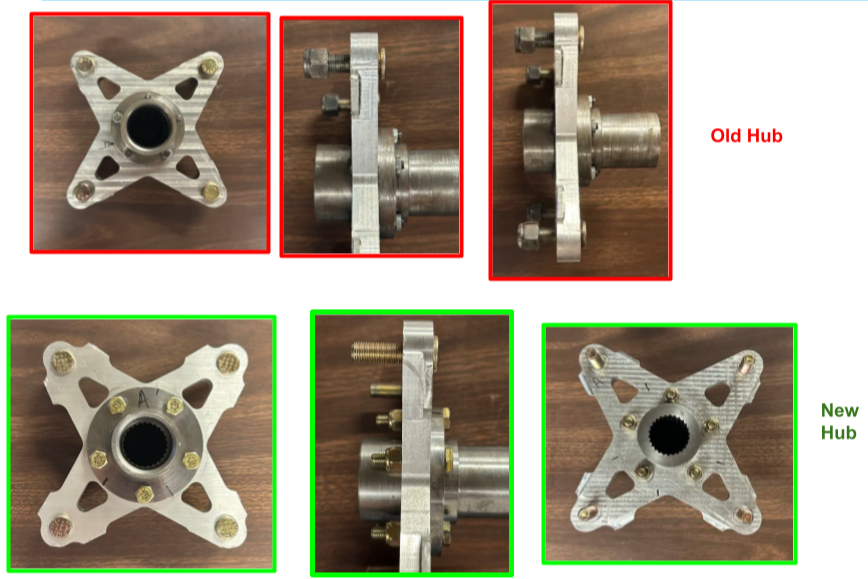
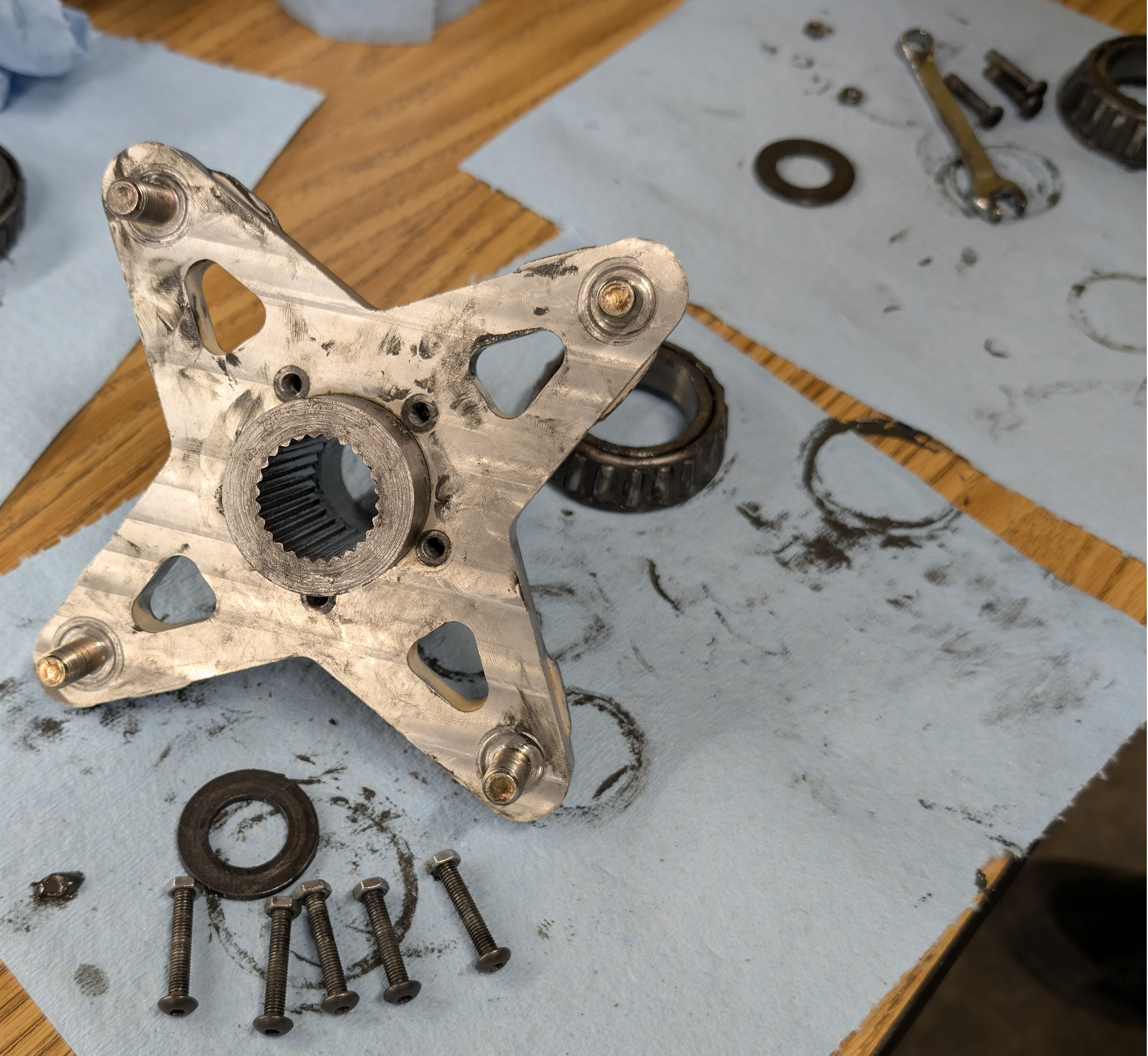
Time is a critical. The original rear suspension hub design utilized Socket Head Cap Screws, which required axial tool clearance for removal. This clearance was frequently obstructed by suspension linkages and the bearing housing, forcing the students to disassemble unrelated components just to access the bolts. Additionally, the standard black oxide finish on the SHCS was prone to corrosion in the Baja track conditions, leading to the potential of seized fasteners and stripping during removal.
The Solution
To resolve these maintenance bottlenecks without compromising structural integrity, I redesigned the fastening system to utilize 1/4"-28 UNF SAE Grade 8 Hex Head Screws with Zinc-Yellow Chromate plating and nylon-insert lock nuts.
Design for Assembly: The switch to a hex head geometry allowed for a socket wrench access, bypassing the axial obstruction and significantly reducing component swap times.
Reliability: The Zinc-Yellow Chromate finish provided corrosion resistance compared to black oxide, ensuring consistent torque application and removal over the vehicle's service life. The fine thread pitch (UNF) and nylon locking inserts were selected to prevent vibrational loosening under dynamic wheel loads.
Engineering Analysis
To validate the material change, I performed a static stress analysis referencing Shigley’s Mechanical Engineering Design.
Clamp Load Analysis: The primary goal was to maintain a friction-grip joint to transfer drive torque without placing the bolts in shear. I selected SAE Grade 8 steel for its high Proof Strength of 120 kpsi. I also applied Shigley’s preload criterion for reusable connections.
Torque Specification: To achieve this preload during assembly, I derived a torque specification by utilizing a torque coefficient (K=0.2) appropriate for zinc-plated fasteners.